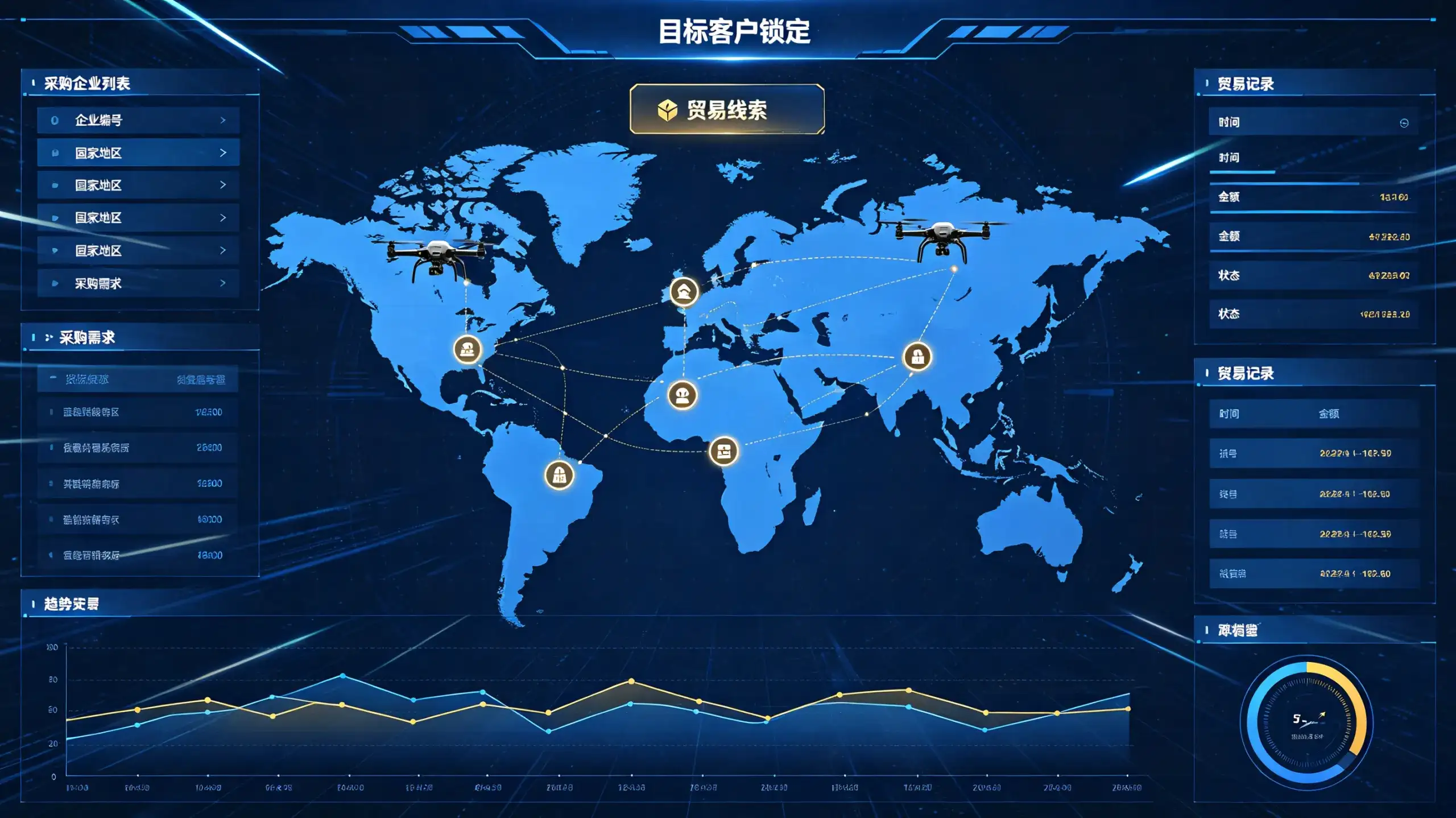
Finding qualified international buyers remains the biggest bottleneck for manufacturers, wholesalers and B2B exporters. Many sellers waste budget on generic B2B listings, cold email blasts, and unfocused trade show trips, only to collect low-intent leads or get ghosted. In 2026, successful buyer hunting is no longer about casting a wide net. It relies on trade data intelligence, targeted account research, localized outreach, and systematic lead qualification.
This step-by-step guide combines proven traditional channels with modern data tools, so you can build a predictable pipeline of genuine importers, distributors and brand buyers for cross-border growth.

Step 1: Lock Your Product, HS Code and Ideal Buyer Profile First
Before searching for buyers, define exactly who you want to serve. Start with your HS code, because nearly all customs, trade statistics and buyer databases rely on this classification to filter real import activity.
Build your Ideal Buyer Profile (IBP) covering these points:
- Product specifications, MOQ, lead time, certification requirements and payment terms
- Target buyer type: importer, wholesale distributor, retail chain, private label brand, sourcing agent
- Market priorities: shortlist 2–4 countries with stable import demand, reasonable logistics costs and acceptable compliance rules
- Decision-maker roles: procurement manager, import director, supply chain head, category buyer
Avoid targeting every country at once. WTO trade data shows demand patterns shift quickly; focus on lanes where your product already has consistent import volume instead of saturated or high-tariff markets.
Step 2: Source Buyer Lists from 5 High-Performance Channels
2026’s best exporter lead mix balances inbound visibility and direct data-backed prospecting. Each channel has clear strengths and trade-offs.
- Customs / Bill of Lading Trade Data Platforms This is the most powerful channel for serious exporters. Customs data reveals companies that have already imported your HS-coded goods, with shipment history, volumes, origin suppliers and port records. Unlike B2B platforms full of window shoppers, these are buyers with proven purchasing behavior. Use the data to identify competitors’ existing customers and spot importers looking to diversify their supplier base.
- B2B Marketplaces for Inbound InquiriesAlibaba.com, Global Sources, Made-in-China and Amazon Business still deliver steady inbound leads for consumer goods, OEM parts and standard industrial supplies. Optimize listings with full certifications, factory photos, test reports and clear pricing tiers. Paid memberships usually outperform free profiles for new suppliers without existing export reviews.
- LinkedIn and B2B Social Selling LinkedIn dominates for reaching mid-sized and enterprise procurement teams. Use Boolean search or Sales Navigator to filter by country, industry and job title. For Southeast Asia, the Middle East and Africa, WhatsApp Business and Facebook Groups often work better for SME importersAlibaba Se…. The golden rule: avoid hard-selling connection notes. Start with relevant industry commentary before introducing your offer.
- Trade Shows, Trade Missions and Reverse Buyer Events Physical and hybrid trade shows still convert well. Industry stats note that roughly 82% of trade show attendees hold buying authority, yet fewer than 20% of exhibitors run structured post-show follow-up sequences. You do not always need a booth: you can attend as a visitor, join official export trade missions, or hire local representatives to collect leads on your behalf.
- Government Trade Agencies and Export Promotion Programs Most countries operate trade offices that offer pre-vetted buyer matching, market reports, legal guidance and introductions to distributors. These introductions carry strong credibility and reduce early trust barriers for new exportersInternatio….
Step 3: Score and Qualify Leads to Filter Tire-Kickers
Raw buyer lists are useless without qualification. Create a simple 1–5 scoring framework to rank prospects and prioritize outreach time:
- Import consistency: Do they place regular orders, or only buy occasionally?
- Order volume: Does their typical order match your MOQ and production capacity?
- Financial and compliance status: Check business registration, sanctions lists and credit risk
- Current supplier setup: Are they locked into long contracts, or actively switching suppliers?
- Local distribution capability: Can they clear customs, store inventory and serve end customers?
Cut low-scoring leads early. Spending weeks negotiating with buyers who cannot meet your terms is one of the most common export mistakes.
Step 4: Find Verified Decision-Makers and Build Contact Data
Once you have a target company list, locate the person who actually approves supplier changes and purchase orders. One importer may have multiple relevant contacts: procurement, logistics and category teams.
Practical tactics:
- LinkedIn Sales Navigator for direct role and contact lookup
- Google dork searches to pull public professional profiles
- Company official websites, press releases and supplier directory pages
- Trade show attendee lists and chamber of commerce directories
Aim for 2–3 relevant contacts per target account. Single-thread outreach fails too often when one contact leaves the company or ignores messages.
Step 5: Run Localized Multi-Channel Outreach Sequences
Generic “we are a factory, please buy” emails get deleted instantly. 2026 buyers expect personalized, context-aware outreach.
Structure your sequence across email + LinkedIn + messaging apps:
- Touch 1 (Email): Reference their recent import activity, a product gap or a public sourcing project. Keep it short, attach only one relevant document such as a spec sheet or certificate.
- Touch 2 (LinkedIn): Send a low-pressure connection request, comment on their recent industry post before pitching.
- Touch 3 (Follow-up email): Add social proof — a similar customer reference from their country or a sample offer.
- Touch 4 (Break-up message): Ask if their sourcing plan has changed, and offer to keep them on your update list.
Adapt tone and channel to region: WhatsApp works faster for Latin America, South Asia and Middle Eastern buyers; formal email communication remains standard for EU, US and large corporate buyersAlibaba Se….
Step 6: Verify Buyers, Negotiate Safely and Pilot with Small Orders
Trust is the foundation of cross-border trade. Before committing to large production:
- Confirm business registration via official local company registries
- Use secure payment terms such as L/C, T/T deposit or Trade Assurance
- Start with sample orders or small trial shipments instead of big bulk POs
- Clarify Incoterms, inspection rules, warranty and after-sales responsibilities in writing
A smooth first shipment turns a one-time buyer into repeat revenue and referrals. Many exporters overlook post-delivery check-ins, missing the chance to lock in long-term partnerships.
Step 7: Track Pipeline, Refine Messaging and Scale Winning Markets
Set up a simple CRM or spreadsheet to track every lead stage: identified, contacted, replied, sample requested, quotation sent, order closed, repeat buyer. Log common objections — pricing, certification, lead time, compliance — and update your sales kit to answer them upfront.
Every 90 days, review which channels and markets deliver the highest conversion rate. If customs-data sourced leads close at double the rate of marketplace inquiries, shift more budget and time there. Buyer development is iterative, not a one-time campaign.
FAQ
Q: Are B2B marketplaces still worth using in 2026?
A: Yes, for inbound inquiries, especially if you sell standard, high-volume goods. But pair them with direct outreach, because competition is fierce and many inquiries are price-only comparisons.
Q: Is customs trade data legal to use for buyer prospecting?
A: Most public bill-of-lading records are legally available trade documents. Still, respect local data privacy rules such as GDPR when sending direct marketing messages to EU contacts.
Q: How long does it normally take to get the first buyer order?
A: For most B2B exporters, 60–90 days from the start of targeted outreach. Industrial and custom product cycles can stretch to 4–6 months, as buyers complete supplier audits and testing.
Q: Should I hire an agent or distributor instead of finding direct buyers?
A: Local distributors are ideal if you lack local compliance, warehousing and after-sales support. Direct buyers usually give higher margins, but require you to handle more logistics and compliance work yourselfInternatio…