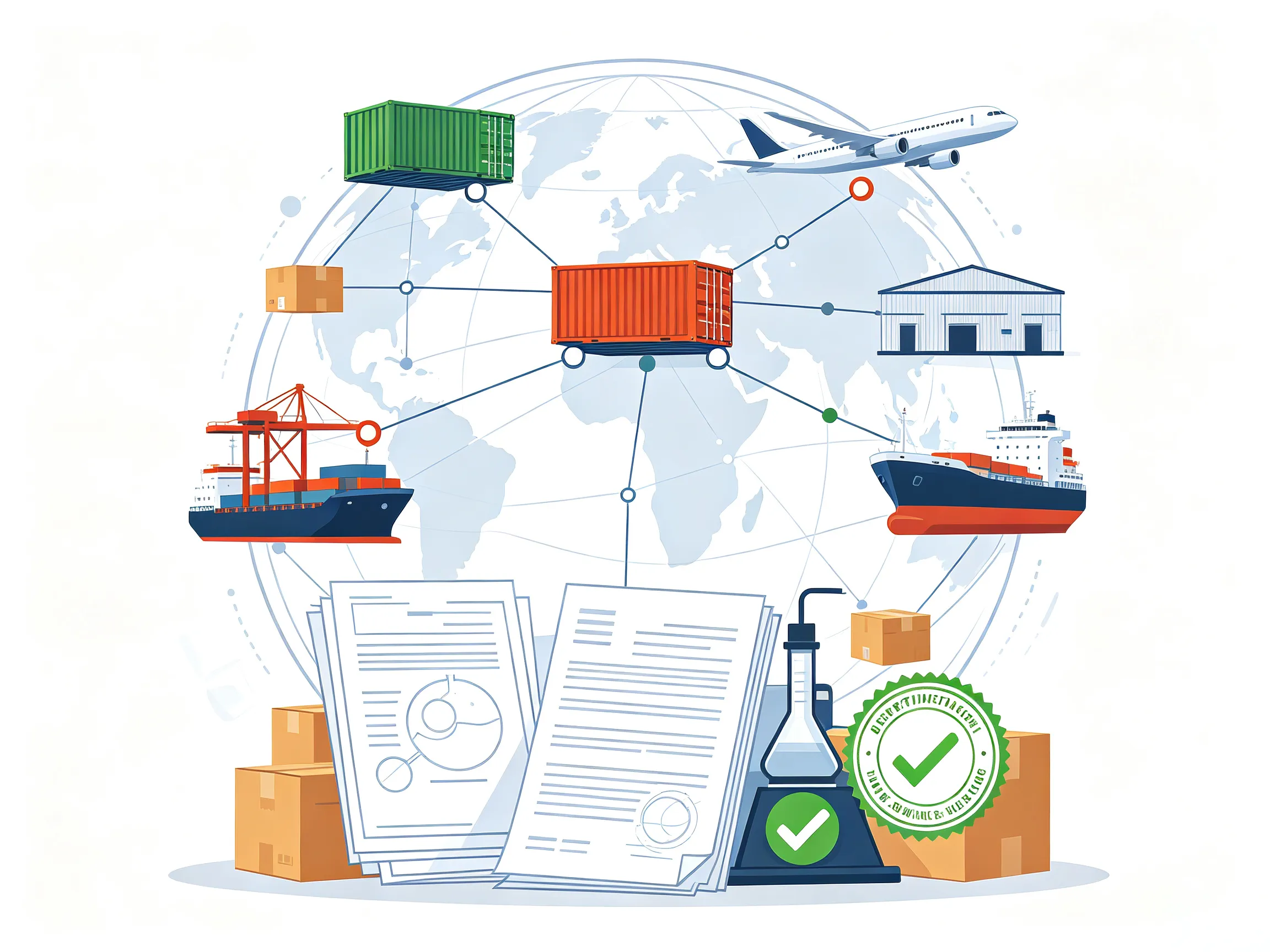
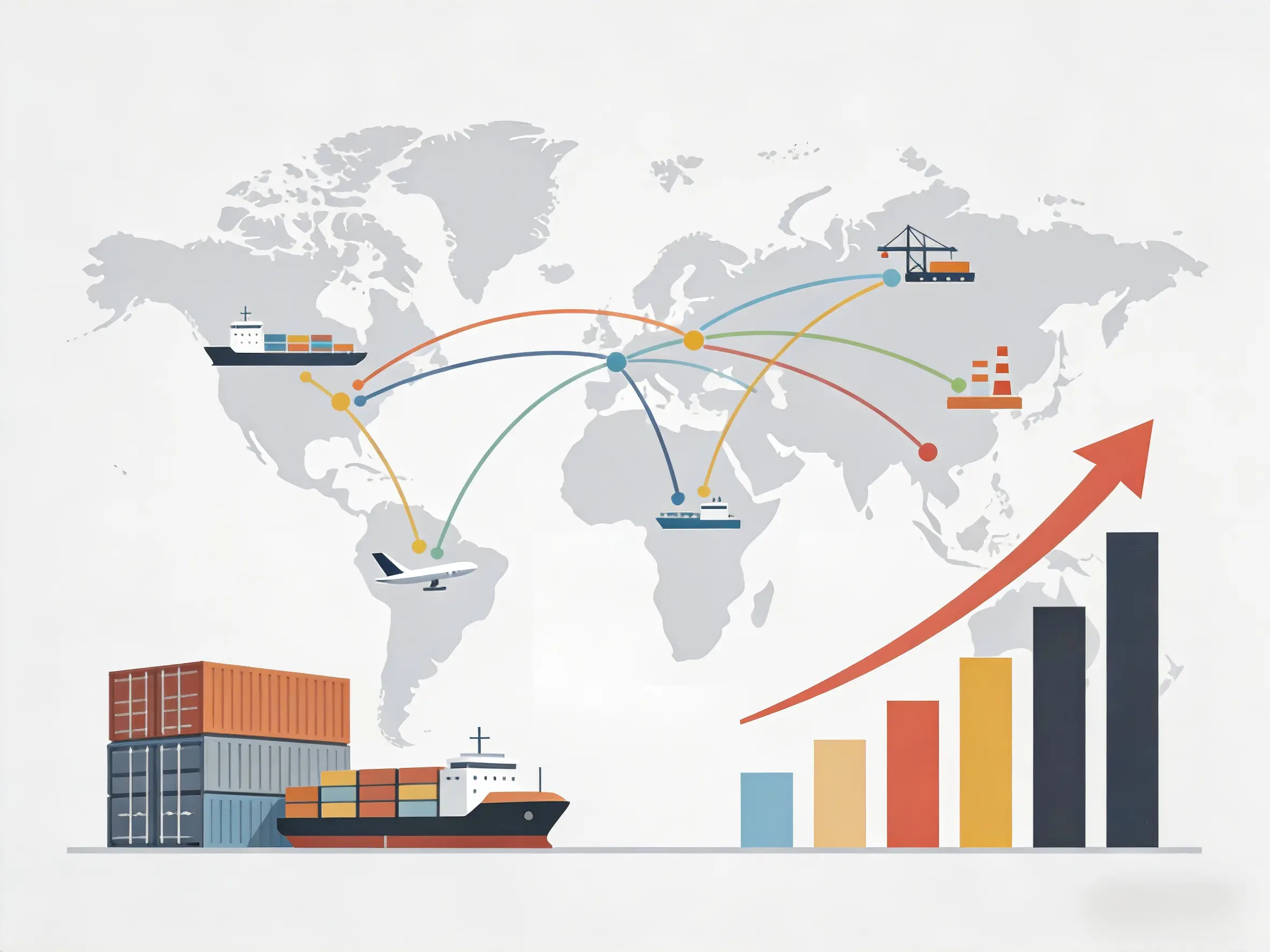
A bill of lading is the legally binding document issued for every ocean shipment, and in the United States a large share of it is public record. U.S. Customs and Border Protection (CBP) releases ocean import manifests under the Freedom of Information Act (FOIA), so anyone can trace who ships what, from which port, to which buyer — at no cost. The real challenge is knowing where to look and how to interpret what you find. This guide covers the top free bill of lading databases and tools, what each one does best, and the practical techniques that turn raw manifests into supplier leads and competitor intelligence.
Why Search Bill of Lading Records?
Importers, exporters, and sales teams search bill of lading records for three main reasons: verifying that a supplier actually ships to your market, mapping a competitor’s sourcing network, and building prospect lists of companies that import products like yours. Ocean manifest data matters because it covers roughly 90 percent of U.S. imports by value. With the right tool, a single company name can reveal years of shipment history — suppliers, countries of origin, product categories, and shipping frequency.
What Public BOL Data Includes — and What It Doesn’t
Before choosing a tool, understand the dataset. Public U.S. records come from the Automated Manifest System (AMS), governed by the 24-hour advance manifest rule in force since December 2003. Each record shows the shipper, consignee, ports, vessel, container count, HS code, gross weight, and cargo description. Three gaps matter in practice:
- Air freight, postal, and express parcels are filed separately and never appear in public BOL data.
- Section 321 de minimis shipments under $800 bypass formal entry; CBP processed roughly 3 million such parcels per day in 2025, none of which appear in manifests.
- Duty paid and declared values live in ACE, CBP’s non-public declaration system.
This is why an e-commerce seller can move hundreds of millions in annual sales yet return zero bill of lading records.
Top Free Databases and Tools
1. CBP FOIA Requests — the Original Source
Every commercial BOL platform is downstream of the same raw material: CBP’s FOIA releases. You submit a request specifying the date range and fields, wait the statutory 20 working days (bulk data usually takes four to six weeks), and receive fixed-width files of 1–10 gigabytes per month. This is free, complete, and authoritative.
Practical tip: This route suits data engineers and researchers building their own pipeline. There is no search interface and no entity normalization — “WALMART INC.” and “WALMART STORES” appear as separate companies you must reconcile yourself.
2. ImportYeti — the Best Free Aggregator for U.S. Ocean Data
ImportYeti indexes more than 700 million customs shipment records, updated daily, and lets you search free by company name, product, or HS code. The free tier caps how many results you can see per query, often 5–25 records, but that is enough for spot checks. Its founding story is a case in itself: the creator built the first version in 27 days and launched it on Reddit’s FBA community as a “Free Bill of Lading Database.”
A concrete example: a public sample record shows The North Face (VF Outdoor LLC) importing from Titas Sportswear Ind Limited in Bangladesh — the exact shipper–consignee–HS code detail that answers “who really makes their product.”
Practical tip: search product descriptions, not just company names, to discover importers you did not know existed. Filter by shipment count to focus on high-frequency buyers.
3. USA Trade Online — Free Official Statistics from the Census Bureau
For market sizing, the U.S. Census Bureau’s USA Trade Online publishes official monthly trade statistics down to the 10-digit HTS code, by country of origin and port. Registration is free and the data is authoritative. The catch: it names no companies.
A concrete example: a search for U.S. importers of Vietnamese solar panels (HS 8541) returned roughly $1.8 billion in aggregate import value but zero company names, while a free aggregator surfaced about 50 companies and a paid platform found more than 200. Use USA Trade Online to size the opportunity first, then switch to BOL tools to find the buyers.
Practical tip: pull multi-year time series to confirm a product category is growing before you invest in deeper research.
4. ImportGenius Free Preview and Volza Free Tier — Quick Checks
ImportGenius is the longest-established U.S. bill of lading database, with deep historical coverage, and its free preview tier returns limited results without a subscription. Volza similarly offers a free tier built for fast lookups.
Practical tip: use ImportGenius’s preview for historical due diligence on a single company, and Volza as a second opinion when ImportYeti’s free results hit their cap. Free tiers rarely allow exports, so capture the records you need while they are on screen.
5. Panjiva (S&P Global) — Trial Access to a Global Trade Graph
Panjiva covers more than 9 million companies and over 2 billion shipment records globally, with particular strength in U.S. and Latin American trade. It has no permanent free tier, but trial access and public trend reports let you test its parent-company linking — a feature that connects subsidiaries to their corporate parents, something free tools do not offer.
A concrete example: Panjiva’s data is routinely cited by trade press. When pandemic-era demand collapsed, its shipment indexes documented a 26.6 percent drop in U.S. seaborne imports of ventilators and a 21.6 percent fall in personal protective equipment — market-level insight that company-level free searches cannot produce.
Practical tip: use the trial period to check one critical supplier’s full history before deciding whether a subscription pays for itself.
Practical Tips for Better BOL Searches
These techniques separate useful results from noise:
- Use full legal names. Searching “Apple” returns thousands of false positives; search the registered entity name and add a city or state filter.
- Combine HS codes with keywords. A product description alone misses shipments filed under slightly different wording; HS codes catch them all.
- Watch for freight forwarders. When the consignee is a forwarder such as Expeditors or Kuehne+Nagel, check the notify-party field to find the real buyer.
- Mind the data lag. Free aggregators run 30–60 days behind, so a “recent” search may already be three months old.
- Cross-check free results. A supplier with zero records may simply have opted out or ship by air — verify with a second source before drawing conclusions.
Final Thoughts
Free bill of lading data is remarkably accessible: start with ImportYeti for company-level searches, USA Trade Online for market statistics, and CBP FOIA for raw, complete records. Combine at least two tools before making any sourcing decision, and remember that free tiers show a glimpse, not the full picture. Searched correctly, public manifests are one of the highest-value free datasets in international trade.