Enterprise Customer Data Platforms (CDPs) have long solved core challenges of fragmented user data and cross-channel identity unification. However, traditional CDPs still rely on manual operation for campaign rule configuration, audience segmentation, content creation, and delivery optimization, resulting in slow iteration and inconsistent personalized effects. In 2026, generative AI has upgraded enterprise CDPs from passive data aggregation tools to active autonomous campaign orchestration systems. Verified industry data shows that AI-powered CDPs reduce manual marketing operation workload by 62% on average and boost cross-channel campaign conversion rates by 21% for large-scale enterprises. This article breaks down generative AI’s core capabilities in enterprise CDPs, shares verified enterprise cases, and delivers step-by-step operational strategies for scalable autonomous campaign deployment.

1. Core Upgrade: From Rule-Based Automation to AI Autonomous Orchestration
Traditional enterprise CDP campaign management operates on static, manually written rules. Marketing teams need to preset user tags, trigger conditions, copy templates, and delivery frequencies, which can hardly adapt to dynamic user behaviors and multi-scenario personalized demands. Generative AI reshapes CDP operation logic through large model understanding, real-time behavioral learning, and generative content output, realizing full-link autonomous orchestration from insight mining to campaign closing.
Specific capability iteration includes three key dimensions. First, intelligent audience evolution: generative AI automatically analyzes unstructured user data including browsing comments, service consultation records, and social feedback to dynamically expand and optimize target crowds, replacing fixed manual segmentation. Second, autonomous content generation: the CDP independently produces personalized emails, push notifications, and landing page copy matching different user portraits. Third, real-time strategy adjustment: the system continuously optimizes delivery time, frequency, and channel allocation based on campaign real-time data feedback.
Practical Operation Advice: When enabling generative AI orchestration on enterprise CDPs, retain core compliance rule frameworks first. Disable fully autonomous delivery for high-risk financial and user privacy scenarios, and adopt “AI generation + manual review” mode. For standardized retail and e-commerce scenarios, open full-process autonomous optimization to maximize operational efficiency.
2. Verified Enterprise Use Cases & Authentic Performance Data
Generative AI-driven CDP autonomous orchestration has achieved stable landing results in banking, retail, and cross-border e-commerce industries, with all data sourced from public enterprise official release and third-party industry verification reports.
Extraco Banks, a large American community bank, deployed Treasure Data’s generative AI CDP agent system in 2025. The platform unifies full-channel customer transaction and behavioral data, and applies generative AI to autonomous campaign planning, user insight mining, and personalized marketing scheduling. After deployment, the bank’s targeted campaign conversion rate increased by 27%, and the new annual incremental asset scale reached $63.6 million. The AI agent replaced repeated manual data query and audience packaging work, shortening the cycle of new campaign launch from 7 days to less than 48 hours.
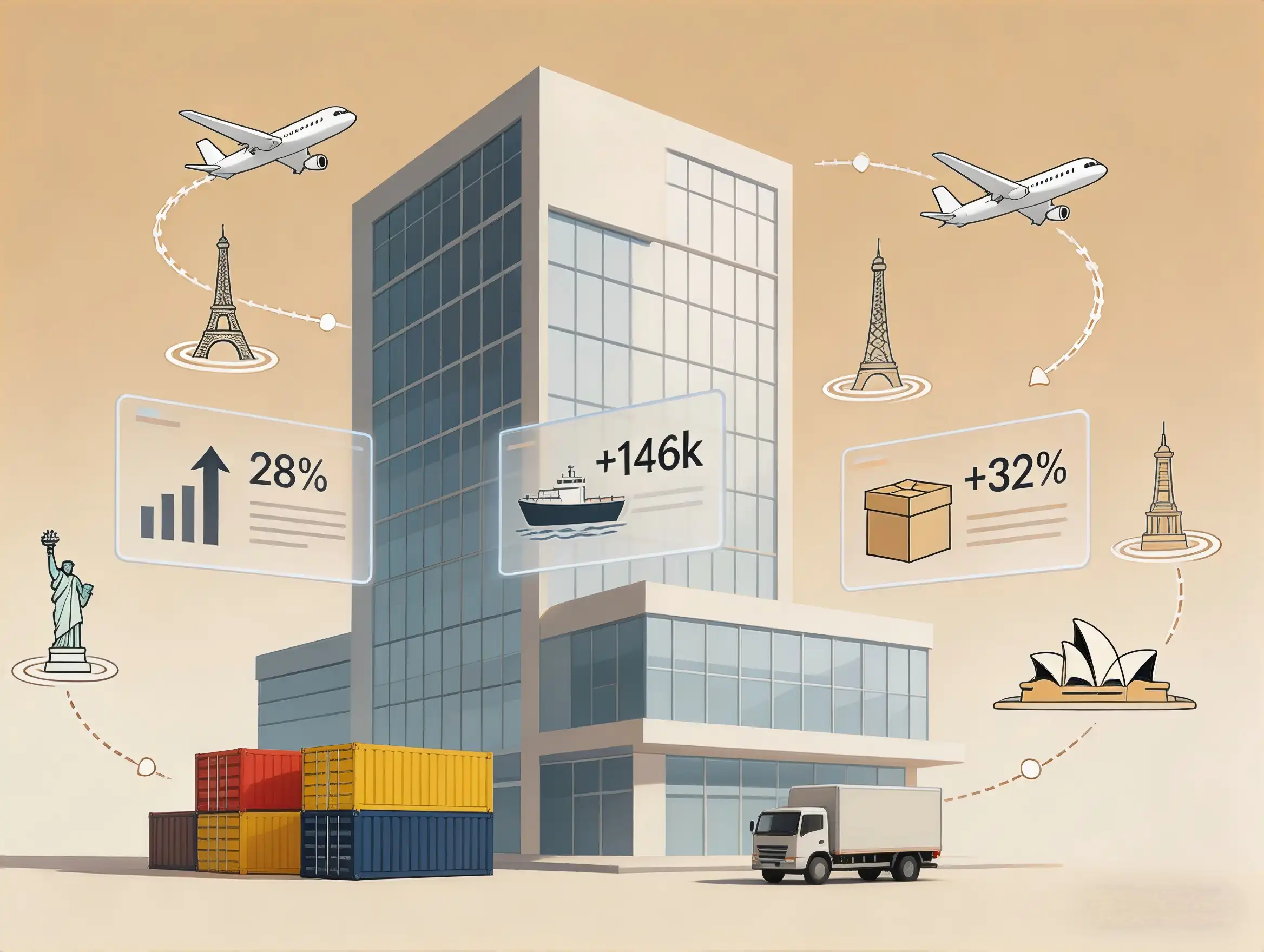
Cross-border e-commerce platform Mercado Libre applied generative AI reinforcement learning CDP architecture to push campaign orchestration. Different from traditional fixed coupon rules and copy templates, the AI CDP independently adjusts preferential intensity, notification copy, and push frequency according to individual user consumption habits and interaction histories. The system realizes user-level one-to-one personalized orchestration, eliminating manual batch configuration. The project effectively reduced user churn rate by 19% and improved push campaign click-through rate by 32%.
In the FMCG industry, Geloso Beverage Group launched the industry’s first full-link autonomous AI campaign based on CDP user portraits. The AI system independently completed crowd screening, creative matching, media delivery, and effect optimization, with zero manual intervention in the whole process. Compared with traditional manual operation campaigns, the autonomous orchestration mode reduced invalid media investment by 24% and improved overall campaign ROI by 28%.
Practical Operation Advice: Enterprises can benchmark the above cases for phased replication. Financial enterprises prioritize AI autonomous insight mining and crowd screening to improve precise marketing accuracy. Retail and e-commerce enterprises focus on generative content and real-time strategy adjustment to optimize user interaction and repurchase rates. All enterprises should establish independent AI campaign effect monitoring dashboards to track incremental benefits.
3. Key Business Benefits of AI-Powered CDP Campaign Orchestration
Large-scale enterprise marketing faces prominent pain points including high manual operation cost, lagging strategy iteration, and homogeneous user delivery. Generative AI CDPs solve these pain points fundamentally with scalable autonomous capabilities, forming three core business values.
First, significant efficiency improvement. Industry official data shows that generative AI CDPs can accelerate enterprise campaign planning efficiency by 3 times. A single marketing team can undertake 2–3 times the original campaign volume without expanding staffing, greatly reducing labor costs for repeated rule configuration and data sorting.
Second, refined personalized operation. Traditional CDPs can only realize group-based segmentation marketing, while generative AI supports ultra-fine-grained individual user orchestration. It automatically identifies user potential demands, dormant characteristics, and preference changes, and matches exclusive marketing strategies, effectively improving user experience and conversion efficiency.
Third, scalable business iteration. The AI CDP system continuously learns from historical campaign data, accumulates industry and brand exclusive operation models, and realizes self-optimization of strategies. With the growth of enterprise user scale and campaign volume, the orchestration accuracy and efficiency will continue to improve, avoiding performance bottlenecks of traditional manual operation modes.
Practical Operation Advice: When evaluating AI CDP value, abandon single conversion rate assessment. Establish a dual evaluation system of “operation efficiency + business increment”, including indicators such as campaign launch cycle, manual workload ratio, user personalized coverage rate, and long-term user lifetime value, to comprehensively measure autonomous orchestration effects.
4. Enterprise Deployment Risks & Standardized Implementation Guidelines
Although generative AI CDP autonomous orchestration has significant advantages, large-scale enterprises still face risks including content compliance deviation, data calculation delay, and algorithm overfitting in the landing process. Standardized deployment specifications are required to ensure stable business output.
Compliance risk is the primary challenge. Generative autonomous content may have inaccurate description or non-compliant marketing statements. Meanwhile, intelligent crowd screening needs to strictly match global user privacy policies such as GDPR and CCPA. Algorithm overfitting will cause single-dimensional delivery preference, leading to user over-marketing and increased churn risk.
Practical Operation Advice: Build a three-layer enterprise deployment specification. First, set fixed compliance guardrails in the CDP system to block non-compliant words, high-risk crowd delivery, and excessive marketing frequency. Second, set regular algorithm inspection mechanisms, conduct manual sampling verification on AI-generated content and crowd packaging results every week, and correct algorithm deviations in a timely manner. Third, adopt phased capacity opening: start with low-risk non-core business campaigns, accumulate stable data iteration experience, and then gradually promote autonomous orchestration to full-channel core marketing scenarios.
5. Future Enterprise CDP Operation Trends
The integration of generative AI and CDPs is shifting from auxiliary tool capability to full-process autonomous business orchestration. Future enterprise CDPs will no longer be limited to data management and basic marketing activation, but will evolve into intelligent marketing decision centers integrating insight mining, creative generation, autonomous delivery, effect analysis, and strategy iteration. For large and medium-sized enterprises, actively deploying AI autonomous orchestration capabilities will become a core competitiveness to reduce operational costs and improve refined marketing capabilities in the digital transformation era.